$10 Off for New Buyers with Code 6YPYU5KC | US Free Shipping | Start from 1 Carton

Neighborhood Pet Store Day 2026: Why Local Pet Retail Still Matters in an Online World


Online shopping has made pet supplies easier to buy than ever. A pet owner can compare products at midnight, place a recurring food order from a phone, or search hundreds of toys without leaving home.
Yet that convenience has not eliminated the need for neighborhood pet stores.
In fact, the more useful question is no longer “local store or online store?” It is “what problem does each channel solve best?”
A neighborhood pet shop can provide immediate availability, human advice, local services, product discovery and a relationship with customers who may return every week. E-commerce provides broad selection, comparison and scheduled convenience. Behind both sits another layer: sourcing and inventory planning, where wholesalers and online wholesale platforms help pet businesses decide what to test, stock and replenish.
That distinction matters as Neighborhood Pet Store Day returns on Saturday, September 26, 2026. The event is organized by the Independent & Neighborhood Pet Retail Association, or IndiePet, and 2026 expands the celebration into a September 25–27 weekend, with Saturday as the main day.
The event deserves attention. But for pet businesses, the more important lesson lasts longer than one weekend:
Do not build a business around a retail holiday. Build it around the customer problems that the holiday makes visible.
 

Neighborhood Pet Store Day Is Growing — but the Bigger Story Is Independent Retail

Neighborhood Pet Store Day began on September 23, 2023. IndiePet created the annual event to highlight independent pet retailers and the role they play in their communities. It is held on the fourth Saturday of September.
Organizer-reported participation has expanded quickly.
Event yearReported retailer participationWhat changed
2023About 700 storesFirst Neighborhood Pet Store Day
2024More than 1,200 storesOrganizer reported roughly 77% participation growth
2025Nearly 2,000 storesParticipation expanded further
2026Sept. 25–27 weekend; Sept. 26 main day

Event expands beyond a single-day format

Sources: IndiePet and Neighborhood Pet Store Day. Participation figures are organizer-reported and should not be interpreted as a census of all independent U.S. pet retailers.
The growth is interesting because independent pet retail exists inside an enormous consumer market. APPA reported that Americans spent $158 billion on the pet industry in 2025, up 3.7% from the previous year, and projected approximately $165 billion for 2026. APPA also estimated that 95 million U.S. households owned at least one pet in 2025.
Dogs alone were present in approximately 71 million U.S. households in 2025, while cats were present in approximately 53 million households, according to APPA. The same report noted that consumers were becoming more value-conscious as economic pressure affected purchasing decisions.
That combination—huge pet ownership plus more deliberate spending—creates an important question for small pet businesses:
Why should someone buy from you when they can buy pet products almost anywhere?
The answer cannot simply be “because we are local.”
It has to be usefulness.

The Independent Pet Store Is Increasingly a Problem-Solving Business

A strong neighborhood pet business does more than put products on shelves. It helps customers make decisions.
That distinction is supported by the 2025 PETS+ Big Survey, which gathered responses from more than 500 owners and top managers of independent pet retailers and service providers in the United States and Canada. When respondents were asked what drove sales most in their businesses, 47% selected customer experience and another 30% selected a knowledgeable sales team. Only 9% selected competitive pricing.
Reported primary sales driverShare of PETS+ respondents
Customer experience47%
Knowledgeable sales team30%
Product lineup11%
Competitive pricing9%
Loyalty programs2%
Coupons and deals1%
Source: PETS+ 2025 Big Survey; 500+ independent pet retailers/service providers in the U.S. and Canada.
This does not prove that price is unimportant. It suggests that among the businesses surveyed, owners and managers believed experience and expertise were more important differentiators.
The same pattern appears when retailers were asked how they compete with e-commerce pricing. 33% said they offer expertise that customers do not find online, while 28% cited the in-store experience.
For a small pet business, that is a much more defensible strategy than trying to win every price comparison.
A store cannot carry every product on the internet.
It can become very good at solving the problems its own customers bring through the door.
 

Online Convenience Has Not Removed the Need for Immediate Availability

There is one advantage of a well-stocked neighborhood pet store that is easy to underestimate:
The product is already there.
A customer can order pet food online. But that does not help much if they realize at 6 p.m. that the food container is empty.
A subscription can deliver litter automatically. But it cannot completely eliminate delayed shipments, forgotten orders, unexpected consumption or a household suddenly needing another bag.
A dog owner preparing for a trip may discover that a leash is damaged. A new adopter may need a crate, bowl, collar and cleanup supplies immediately. A groomer can unexpectedly run low on consumables. A boarding operation may use more supplies than forecast during a busy weekend.
These are not arguments against e-commerce. They show that planned convenience and immediate availability solve different problems.

Three Channels, Three Different Jobs

ChannelStrongest roleTypical customer needMain limitation
E-commercePlanned convenience and broad comparison“I know what I need and can wait for delivery.”Delivery time separates purchase from use
Neighborhood pet storeImmediate access, advice and service“I need this today” or “I need help choosing.”Physical shelf and storage space are limited
Wholesale sourcing platformProduct discovery, business sourcing and replenishment“What should my business stock or reorder?”Does not replace local last-mile availability unless specifically offered
In my view, this is one of the most practical reasons physical pet retail remains relevant.
Emergency replenishment is not a niche scenario simply because online shopping exists.
The better strategy is therefore not to fight digital commerce as though only one channel can survive. Independent businesses can use their physical availability as part of a broader omnichannel value proposition: customers can research online, contact the store, confirm availability and pick up what they need.
For retailers, the corresponding challenge is harder: you cannot provide immediate availability if the right product is out of stock.
That makes inventory planning part of the customer experience.
 

The Inventory Problem: You Need Enough Stock, but Not Too Much

Small pet businesses operate under constraints that large retailers can absorb more easily.
Shelf space costs money. Storage costs money. Inventory consumes cash before it generates revenue. Every additional size, flavor, color or variation increases the amount of capital sitting on a shelf.
The 2025 PETS+ survey illustrates that pressure. Among respondents, 28% said they buy what fits on the shelf because they have no storage, while another 22% said they buy what fits on the shelf because they do not have the funds to buy deeper. The largest group, 43%, said they generally buy what they expect to sell within two to three months.
 
 
Inventory approachShare of respondents
Buy what fits on the shelf — no storage28%
Buy what fits on the shelf — insufficient funds to buy deeper22%
Buy roughly 2–3 months of expected sales43%
Buy roughly 6 months6%
Buy roughly 1 year1%
 
Source: PETS+ 2025 Big Survey.
This is why “more SKUs” is not automatically a better assortment.
A small store with 5,000 poorly selected items can be less useful than a smaller assortment built around recurring customer problems.
The objective should be productive availability: having enough of the products customers are likely to need, while preserving enough cash and shelf flexibility to test something new.
 

Curate Around Problems, Not Just Product Categories

Traditional merchandising begins with categories: dog toys, cat bowls, collars, grooming tools, small-animal accessories.
A more customer-centered assortment begins with situations.
Consider the difference.
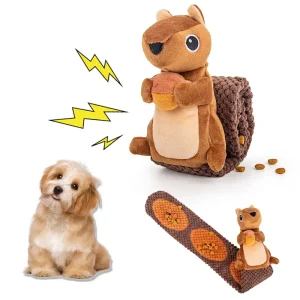
Interactive Squeaky Plush Squirrel Dog Chew Toy
Customer situationImmediate needPossible product directionRetail opportunity
New puppy comes homeBasic setupBowls, collar/harness, leash, toys, cleanup suppliesStarter bundle
Food unexpectedly runs outImmediate replenishmentCore food or feeding essentialsRepeat purchase
Dog pulls on walksBetter controlSuitable walking equipment + guidanceProduct + education
Grooming appointmentCoat maintenanceBrushes, combs, shampoos, aftercareService-to-retail cross-sell
Road trip tomorrowTravel readinessPortable bowls, travel accessories, cleanup productsOccasion-based bundle
Cat appears bored indoorsEnrichmentInteractive toys, scratchers, puzzle productsEducation-led discovery
Rabbit or guinea pig setupSpecies-specific careHay accessories, enrichment, habitat productsSpecialist assortment
New adoptionMany needs at onceEssential setup productsRescue/store partnership
This approach also makes merchandising easier.
Instead of asking, “How many toys should I stock?”, ask, “Which play problems am I helping customers solve?”
Instead of asking, “How many bowls can fit on this shelf?”, ask, “Do I cover everyday feeding, travel, slow feeding and different pet sizes?”
The category still matters. But the customer problem determines why the category deserves shelf space.
 

Services Make Independent Pet Businesses Harder to Compare With a Product Page

Independent pet businesses are also not limited to retail.
In the PETS+ 2025 survey, 38% of respondents described their core business as brick-and-mortar pet supply stores with services, while 37% were stores without services. Grooming salons, boarding/daycare businesses, training facilities, veterinary businesses and animal-welfare organizations that also sold supplies were represented as well.
Among surveyed pet supply stores that offered services, 59% offered grooming, 37% self-wash, 22% boarding, 22% daycare and 21% training.
Service offered by surveyed stores with servicesShare
Grooming59%
Self-wash37%
Boarding22%
Daycare22%
Training21%
Dog walking/pet sitting7%
Veterinary care7%
Source: PETS+ 2025 Big Survey. Multiple selections were possible.
This creates natural retail moments.
A groomer can recommend an appropriate maintenance brush after an appointment. A trainer can help a customer understand walking equipment. A boarding facility can merchandise treats, travel accessories or enrichment products. A veterinary clinic’s retail side can stock carefully selected care products appropriate to its professional scope.
IndiePet recently profiled a Minneapolis service business that expanded daycare and boarding into bathing, grooming and eventually dog-focused retail boutiques. The owner described the logic in simple terms: customers already using a service appreciated being able to pick up a toy, treat or gift at the same time.
That is an important lesson for groomers, trainers and boarding businesses: retail does not always need to become a separate business model.
Sometimes it is simply the next useful step in an existing customer journey.
 

What Neighborhood Pet Store Day Data Can — and Cannot — Tell Us

Neighborhood Pet Store Day provides useful promotional evidence, but the numbers require context.
According to IndiePet’s report using Astro Loyalty data, 2025 event offer redemptions were four to five times higher than a typical weekend. IndiePet also reported a 52% increase in new or reactivated customers for participating brands, while overall sales in the measured program were reported as 42% higher.
Those figures should not be read as “every independent pet store in America increases sales 42% on Neighborhood Pet Store Day.”
They describe activity measured through the participating ecosystem and promotional program, including Astro Loyalty data. They are useful evidence of how coordinated promotions can perform among participating retailers and brands, not a nationwide retail benchmark.
The 2024 event tells a similar story. IndiePet reported more than 1,200 participating retailers, more than 100 brand-sponsored Astro offers and approximately $2 million in MSRP generated through the promotion. A post-event retailer survey also found that 71% of respondents reported increased traffic. Again, those results describe participants and respondents, not every independent store.
That distinction matters for E-E-A-T.
Good business content should tell readers not only what a number says, but what population the number actually describes.

A One-Day Promotion Works Better When It Creates a Reason to Return

Discounts can bring someone through the door. They are less powerful if the relationship ends at checkout.
The stronger Neighborhood Pet Store Day strategy is therefore:
promotion → discovery → experience → relationship → repeat purchase
A retailer might use the event to introduce a new product with samples, demonstrate grooming or training techniques, invite a local rescue, run a loyalty offer, showcase an exotic-pet section or create a bundle around a common problem.
The transaction is useful.
The information learned from the transaction can be even more useful.
Which samples generated purchases? Which product needed the most explanation? Which promotion attracted new customers? Which customers returned? Which bundle sold without a large discount?
That is how a retail holiday becomes a merchandising experiment rather than simply a margin giveaway.
 

Community Events Can Create Value That Discounts Cannot

Pet stores have a natural advantage in community marketing: pets give people a reason to participate.
A store event can include adoption organizations, trainers, groomers, product demonstrations, pet photography, nutrition education, samples, loyalty rewards or activities for customers and their animals.
A Pet Age profile of Pet People of Los Gatos showed how one independent retailer developed Neighborhood Pet Store Day from a sales promotion into a broader community event involving vendors, food, activities and local groups. The store owner reported that the event became one of the business’s most significant annual occasions. That is one store’s experience rather than industry-wide evidence, but it provides a useful operating example.
The important point is not that every store should copy the format.
It is that community can be part of the product.
An online checkout can sell a bag of treats.
A neighborhood business can potentially connect the same purchase with advice, an adoption organization, a training conversation, a groomer, a local event and a reason to return.
 

Small-Town Pet Businesses May Have an Especially Clear Role

The idea of a neighborhood pet business is not limited to dense urban neighborhoods.
In fact, 28% of PETS+ 2025 Big Survey respondents were based in towns with populations of up to 25,000, and another 35% were in small cities with populations between 25,001 and 250,000.
For customers searching “pet services near me” in a small town, the most useful result may not be a giant specialist store. It may be a hybrid business.
A groomer might sell basic care products. A feed store may carry dog, cat and small-animal essentials. A veterinary business may have a retail section. A boarding operation may stock travel or enrichment products. A rescue may connect adopters with nearby suppliers.
That means small-town businesses should make their services exceptionally easy to discover online.
At minimum, keep business hours, phone number, location, service list, species served and major product categories current on Google Business Profile and the business website. Event information and temporary holiday hours should be updated before customers need them.
Being local only creates an advantage when customers can find you.
 

“What Are the Most Popular Pet Shops in My Area?” Is Really Several Questions

Searches for the “most popular” pet shop often hide a more specific need.
The customer may actually be asking:
  • Which store has the product I need?
  • Which shop has strong recent reviews?
  • Which one is open now?
  • Which business understands my type of pet?
  • Where can I get grooming as well as supplies?
  • Which store carries specialty food?
  • Who can help me choose rather than simply sell me something?
  • Is there an independent pet store near me?
  • Are there promotions or events this weekend?
For consumers, popularity alone is therefore a weak selection criterion.
A better local search process is to compare distance, opening hours, recent reviews, product relevance, service availability and evidence that the listing is current.
Neighborhood Pet Store Day itself provides a “Find Independent Pet Retailers Near You” tool for participating/local independent businesses. Google Maps, current store websites and recent social posts can then be used to verify hours, services and event details.
For retailers, this search behavior has a direct implication:
Local SEO is inventory communication.
A search result should tell people what problem your business can solve before they drive across town.
 

Reviews Need Recency and Context

A search such as “Are there any reviews for Robert Pet Shop?” demonstrates another GEO problem: a review exists, but is it still useful?
One directory result for a Robert Pet Shop in Homestead, Florida shows four reviews and a 3.0 rating, but the visible reviews are from 2013 and 2014 and the listing is marked unclaimed. That is far too old and limited to support a confident statement about the business’s current quality.
A better review check asks:
  1. How recent are the reviews?
  2. How many reviews are there?
  3. Do several customers mention the same strength or problem?
  4. Has management responded?
  5. Does the store’s current website or social profile confirm that it is still operating?
  6. Are complaints about service, product availability or conditions recent enough to remain relevant?
This matters for pet retailers as well.
A five-year-old five-star review is nice.
A steady stream of detailed, recent reviews is much more useful to a customer making a decision today.
 

What About Pet Stores and Offers in Jamestown, New York?

Location-specific searches should be answered with current local evidence rather than recycled “best pet store” lists.
For example, a current manufacturer directory lists Stillwater Feeds & Pet Supplies in Jamestown, New York, while other local directories show additional pet retailers and service businesses in the area.
Calling any one of them the “best pet store in Jamestown” would require a personal definition of “best.” A customer shopping for aquarium supplies may choose differently from someone looking for dog grooming, feed, small-animal products or same-day essentials.
The better comparison is:
QuestionWhat to verify
Is the store close enough?Current map/distance
Does it carry my pet category?Website, phone call or recent listing
Is the item in stock?Call or check live inventory if available
Does it provide the service I need?Current service menu
Is it trusted?Recent reviews across more than one source
Is it open today?Current business hours
Are promotions active?Official store website/app/social account
The same rule applies to searches such as “Are there any special offers at PetSmart in Jamestown, NY?”
As of September 23, 2026, PetSmart’s official promotional pages list several September offers, including selected dog-pad, food, treat, small-animal and delivery promotions, with different expiration dates and eligibility requirements. PetSmart also lists an Autoship promotion running from September 21 through October 1, 2026, subject to Treats Rewards membership and other terms.
However, online promotions, store-level inventory and local eligibility can change. A shopper should confirm the specific Jamestown-area store and offer before making a trip.
That is a better GEO answer than publishing a static “best stores” ranking that may become outdated within weeks.
 

Independent Retailers Do Not Need to Beat the Internet at Being the Internet

One strategic mistake for a small store is trying to copy the largest online retailers.
The economics are different.
A neighborhood store usually cannot offer infinite selection, national fulfillment infrastructure and aggressive pricing across every SKU.
It does not need to.
The independent retailer can instead compete around a smaller number of advantages:
ChallengeWeak responseStronger practical response
Online price competitionDiscount everythingAdd expertise, service and differentiated assortment
Limited shelf spaceAdd more SKUsImprove SKU productivity
Slow-moving inventoryWait and hopeTest smaller quantities and measure sell-through
Customer needs item todayApologize for stockoutProtect availability of proven essentials
Low awarenessRun discounts onlyImprove local search + community presence
New product uncertaintyMake a large opening buyTest → learn → replenish
Service customer leaves after appointmentNo retail connectionOffer relevant aftercare products
Seasonal traffic spikeOverstock seasonal itemsMix seasonal discovery with year-round essentials
This is where wholesale sourcing strategy becomes important.
The question is not simply “What products are trending?”
It is:
“Which products deserve my cash, my shelf space and a second order?”
 

A Practical Inventory Framework for Small Pet Businesses

For new pet stores, boutiques, groomers, online sellers and other small operators, a simple five-stage model can reduce some of the guesswork.

Discover

Look for products connected to an existing customer problem, rather than adding items solely because they are visually interesting.

Test

Start with an amount appropriate to the business’s available cash, storage and expected demand.

Learn

Track what customers ask, what sells, what requires explanation, what gets returned and what naturally sells together.

Replenish

Reorder proven products before availability becomes a customer-service problem.

Expand

Only deepen the assortment after there is evidence that the category deserves more space or variants.
 
 
StageCore questionInventory risk
DiscoverDoes this solve a real customer need?Buying because of hype
TestWhat is the smallest useful test?Overcommitting cash
LearnWhat did customers actually do?Relying on assumptions
ReplenishWhich proven SKUs need protection?Stockouts
ExpandWhich category deserves more depth?Too many variants
 
This model is especially useful for small businesses because cash tied up in inventory cannot simultaneously pay rent, staff, marketing or another supplier.
Inventory is not just merchandise.
It is working capital sitting on a shelf.
This model is especially useful for small businesses because cash tied up in inventory cannot simultaneously pay rent, staff, marketing or another supplier.
Inventory is not just merchandise.
It is working capital sitting on a shelf.
 

The Best Assortment Is Different for Different Pet Businesses

A groomer and an online pet seller should not build the same assortment simply because both operate in the pet industry.
Business typeNatural retail opportunityInventory emphasis
Groomer / salonCoat care and aftercareBrushes, combs, grooming-related essentials
Dog trainerTraining and walkingRewards, treat pouches, leads, enrichment
Pet boutiqueDiscovery and giftingDistinctive accessories, toys, lifestyle items
Physical pet storeRepeat local needsCore essentials + curated discovery
Boarding/daycareConvenience around staysTreats, travel, enrichment, care products
Veterinary retail sideProfessionally relevant careCarefully selected appropriate products
Online pet sellerSearch-driven assortmentProducts with clear differentiation/content potential
Social commerce sellerDemonstrable productsVisually understandable, problem-solving items
Subscription-box sellerRepeat discoveryCompact, engaging, theme-friendly products
BreederRepeat operational needsPractical care and setup supplies
Rescue/adoption organizationNew-pet transitionStarter essentials and education
Exotic-pet specialistSpecies-specific expertiseHabitat, enrichment and husbandry-related supplies
The commercial opportunity comes from matching customer context with assortment, not from trying to sell every possible pet product.


Where Petfairs Fits Into This Supply Chain

Neighborhood pet stores and online wholesale platforms solve different parts of the same problem.
The local retailer faces the pet owner.
The wholesale platform helps the business behind that retailer discover and source products.
Petfairs is an online pet-supplies wholesale platform serving small businesses and larger professional/prosumer buyers. Its assortment spans common dog and cat supplies as well as products for exotic and other companion animals, with delivery available to most global markets.
For a new pet shop, groomer, online seller, boutique, trainer or other pet business, the value of a broad sourcing platform is not simply having access to “more products.”
The useful part is being able to explore assortment possibilities across multiple customer situations.
A groomer might investigate retail products that complement grooming appointments. A boutique may test accessories and enrichment. An e-commerce seller may search for products that address a specific customer problem. A business serving reptiles, birds or small mammals may need sourcing options beyond mainstream dog-and-cat categories.
The important distinction is that Petfairs should not be viewed as replacing the neighborhood store.
Wholesale sourcing and neighborhood retail operate at different layers of the supply chain.
A retailer’s job is to understand the local customer.
A sourcing platform’s job is to help that business build and replenish the assortment it wants to offer.
And this brings us back to the replenishment problem.
When a consumer urgently needs pet food tonight, a local store with stock has an obvious advantage.
When that local store notices that an important SKU is selling faster than expected, its next challenge is upstream: how quickly can it recognize the pattern, reorder appropriately and avoid turning a successful product into an empty shelf?
That is why replenishment discipline matters just as much as product discovery.
 

What Neighborhood Pet Store Day Should Teach Pet Businesses

Neighborhood Pet Store Day is useful because it temporarily concentrates attention on independent pet retail.
But the most valuable lessons are ordinary ones.
Customers want products they can trust.
They want help when a decision is confusing.
They sometimes need an item immediately.
They value convenience, but convenience has more than one definition.
For one person, convenience means a package arriving automatically every month.
For another, convenience means walking five minutes to a store and leaving with the right product ten minutes later.
For a grooming customer, convenience can mean buying a recommended brush immediately after an appointment.
For a new adopter, it can mean getting the basic setup and practical guidance in one stop.
For an exotic-pet owner, it can mean finding someone who actually understands the species.
Independent pet businesses do not need to solve every one of these situations.
They need to decide which situations they want to be exceptionally good at solving.
That is a much stronger foundation for assortment planning than simply chasing the largest category or newest trend.

Sources & Methodology

This article distinguishes national market data, industry surveys, organizer-reported event results, individual retailer examples and editorial recommendations.
American Pet Products Association (APPA), 2026 State of the Industry release. Used for U.S. pet-industry expenditures, pet-owning households and dog/cat ownership data. APPA reported $158 billion in 2025 expenditures and a $165 billion 2026 projection. APPA — U.S. Pet Industry Reaches $158 Billion in 2025
Independent & Neighborhood Pet Retail Association / Neighborhood Pet Store Day. Used for event date, history, participation and organizer-reported promotional results. These figures describe the event and participating ecosystem; they should not be generalized to every U.S. pet retailer. Neighborhood Pet Store Day official site IndiePet 2025 event results
PETS+ 2025 Big Survey. More than 500 independent pet retail/service owners and top managers in the U.S. and Canada participated. Survey findings are useful for understanding the respondents but are not presented here as a census of the entire pet retail industry. PETS+ Big Survey 2025
Pet Age. Used for the Pet People of Los Gatos example. This is a single-business case study and is identified as such rather than presented as an industry benchmark.
PetSmart official promotional pages. Used only for the date-stamped September 2026 offer example. Promotions and eligibility may change.
Local directories and current listings. Used only to illustrate how location-specific search questions should be verified. A directory appearance or star rating is not treated as an endorsement or a definitive ranking.
Community-question research. Public community discussions can be useful for identifying the questions pet owners repeatedly ask—such as where to find products locally, whether a store carries a particular item and how to handle urgent purchases—but anecdotal posts are not treated as market statistics. Quora was not used as formal evidence because reliable access to the original relevant pages could not be consistently verified; search snippets or secondary reproductions were not substituted for primary evidence.

Final Takeaway

Neighborhood Pet Store Day may last one weekend, but the competitive advantages it highlights matter throughout the year.
Independent pet businesses do not have to carry everything. They do not have to become the cheapest option on every search result. And they do not have to choose between being “physical” and being “digital.”
They need to be findable, knowledgeable, useful and stocked for the customer problems they have chosen to solve.
Even in a world where almost everyone can shop online, there will still be moments when a pet owner needs something now—not two days from now. That makes local availability valuable.
At the same time, local availability does not happen by accident. Behind the shelf are assortment decisions, working capital, sourcing, testing, forecasting and replenishment.
For small pet businesses, the opportunity is therefore not to stock the internet.
It is to understand the customer, stock the need, learn from the sale and replenish what proves its value.
Aria

Petfairs Writer Introduction:

Hi, I’m Aria—an animal lover rooted in Minnesota with 11 years of hands-on pet parenting experience. Raised in a small town here, I’ve spent years helping neighbors train their cats and dogs, from correcting basic behaviors to fostering better human-pet bonds. Beyond caring for my own furry companions, I’m passionate about rescuing stray animals, dedicating time to their care and rehoming. With a deep understanding of what pets (and their owners) need, I’m here to share practical insights, tailored to Minnesota’s climate and pet owners’ daily lives—all backed by my years of real-world pet care experience.
FAQ

What is Neighborhood Pet Store Day in 2026?
The main celebration is Saturday, September 26, 2026. IndiePet has expanded the 2026 program into a September 25–27 weekend, with Saturday remaining the principal celebration day. The campaign highlights independent pet retailers and their contributions to local communities.
Start with the Neighborhood Pet Store Day independent-retailer locator, Google Maps or another current local directory. Then verify the store’s website or social account for current hours, product categories, services and event information.
“Popular” is not always the same as “right for your pet.” Compare recent review volume and quality, distance, hours, product specialization, services, species expertise and current inventory. For an urgent purchase, call before traveling.
Choose according to the need. A dog-and-cat boutique, aquarium specialist, feed store, exotic-pet retailer and grooming business solve different problems. Look for evidence that the store actively serves your pet category rather than relying only on its overall star rating.
Often, yes, particularly around Neighborhood Pet Store Day. Participating stores may offer brand promotions, samples, raffles, demonstrations or community activities, but offers vary by retailer. Check the participating store’s current event page or social channels instead of assuming a national promotion applies everywhere.
Search by the service rather than only “pet store”: try grooming, self-wash, boarding, daycare, training, veterinary retail, feed store or pet supplies plus the town name. Small-town pet businesses are often hybrid operations, so a service business may also sell relevant supplies.
An online directory currently surfaces an unclaimed Robert Pet Shop listing in Homestead, Florida with four reviews and a 3.0 rating, but the visible reviews are more than a decade old. That evidence is too stale and limited for a current quality judgment. Check recent Google, Yelp or social-platform reviews and confirm that the business information is current.
PetSmart’s official site currently lists September 2026 promotions across several categories and an Autoship promotion running September 21–October 1, subject to terms and eligibility. Offers and local inventory can change, so confirm the current Jamestown-area store and promotion on PetSmart’s official site before visiting.
There is no objective single “best” store without knowing what the customer needs. Current directories show local pet-supply options in the Jamestown area, but compare them by species, inventory, services, recent reviews, hours and distance rather than relying on a generic ranking. For urgent purchases, verify stock directly before traveling.

Related Blog

Winter Pet Supplies 2026 Retail Stocking Guide

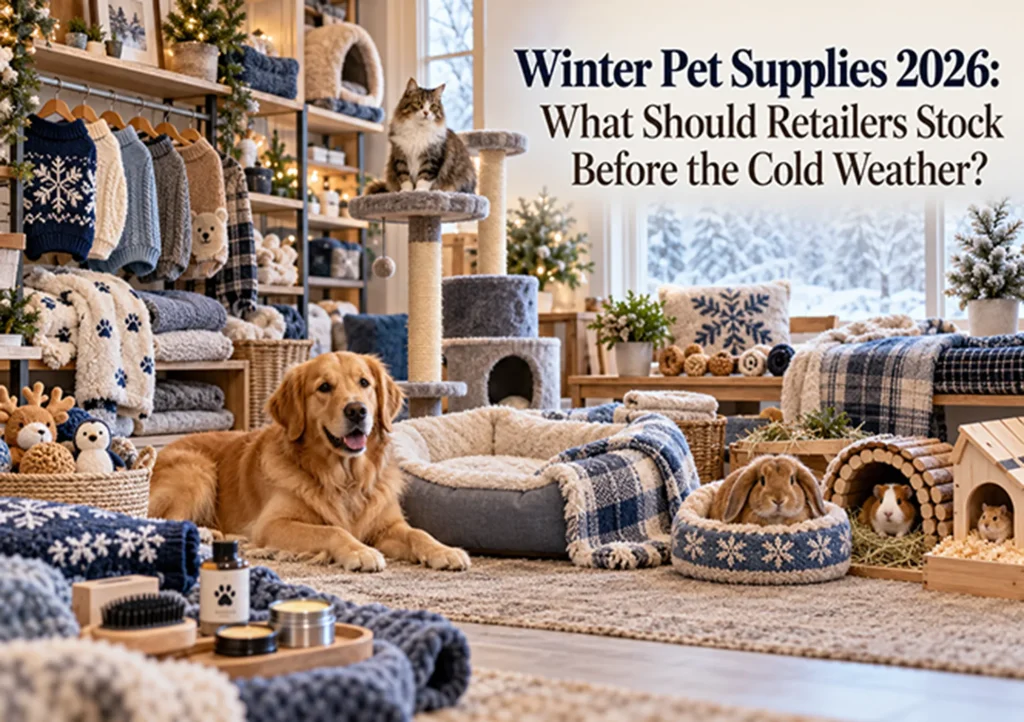
Winter Pet Supplies 2026: What Should Retailers Stock Before the Cold Weather?

Explore winter pet supplies for dogs, cats, and small pets. See what retailers should stock, when to reorder, and how to plan winter inventory.
Neighborhood Pet Store Day 2026 Why Local Pet Retail Still Matters in an Online World

Neighborhood Pet Store Day 2026: Why Local Pet Retail Still Matters in an Online World

Explore Neighborhood Pet Store Day 2026 trends, and learn why local independent pet retail remains irreplaceable amid online shopping. Get 2026 US pet industry data, store operation & inventory strategies for local pet businesses.
pet retail trends 2026

Not Attending SUPERZOO 2026? Source 2026 Trending Pet Bestsellers Online

Skipping SUPERZOO 2026? Discover pet retail trends, compare sourcing options, test products with low MOQs, and find your next bestseller online.

Table of Contents

Leave a Reply

Your email address will not be published. Required fields are marked *

You May Also Like

us.petfairs

SHIPPED FROM U.S LOCAL WAREHOUSE

Register to Unlock

Wholesale Prices

$10 Off for New Buyers : 6YPYU5KC

✓ Factory-Direct Pricing on Pet Supplies

✓ Low MOQ: Only 1 Carton

✓ Free Nationwide Shipping

Having trouble finding
what you need?

Please select the problem you’re experiencing: