$10 Off for New Buyers with Code 6YPYU5KC | US Free Shipping | Start from 1 Carton
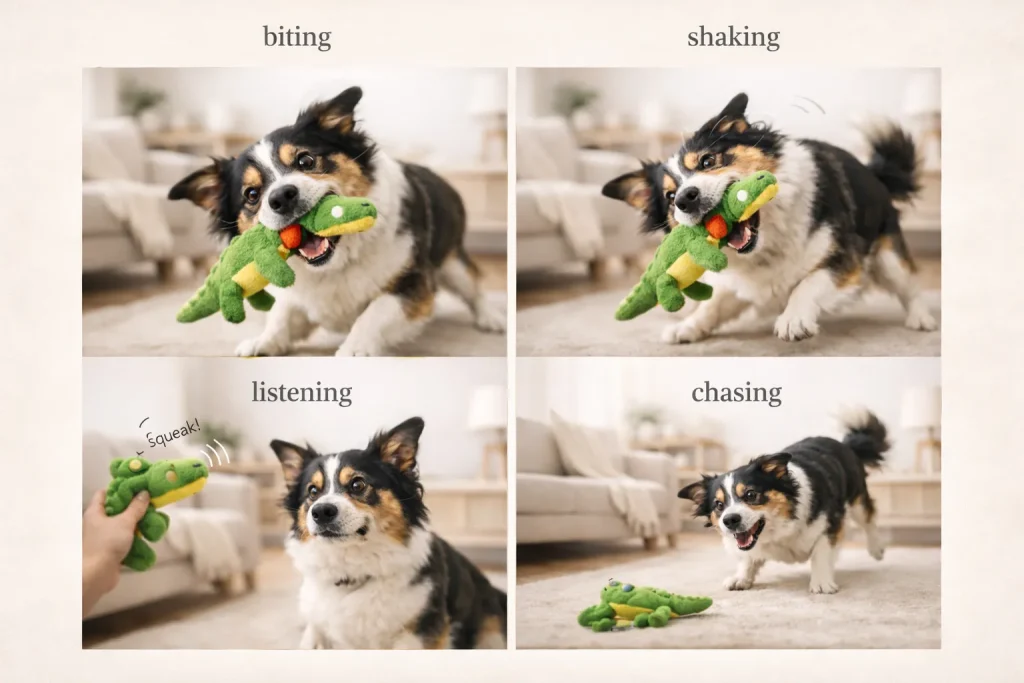
If you’ve ever watched a dog go wild over a dog squeaky toy, you’ve seen the instant frenzy: head tilt, zoomies, and that signature shake-and-kill motion. Whether it’s a squeaky ball dog toy, rubber squeaky dog toys, squeaky animal dog toys, a dog squeaky bone toy, or a fun squeaky carrot dog toy, the appeal is real—and rooted in solid canine science.
 
Pet professionals (groomers, trainers, vets, breeders, shelter staff, and e-commerce sellers) and everyday owners alike ask the same question: why do dogs like squeaky toys (or why does my dog like squeaky toys)? The short answer: these toys hit multiple hardwired buttons at once—prey drive, auditory excitement, instant feedback, chew satisfaction, and novelty. Below is a clear, evidence-based breakdown with fresh data, practical comparisons, and buyer tips tailored for small B and large C pet businesses worldwide.
Why Do Dogs Like Squeaky Toys

1. Prey-Drive Activation: Squeaks Mimic Real Prey in Distress

Dogs descend from predators wired to chase, grab, and “dispatch” small prey. High-pitched squeaks closely resemble the distress calls of rodents, birds, or rabbits. This triggers the full predatory-play sequence (stalk → pounce → shake → “kill”).
 
Multiple studies confirm this:
  • Kennel research (Pullen et al., 2010) showed dogs spent significantly more time interacting with less-robust, noise-making toys than hard, silent ones.
  • Behavioral reviews note that squeaky toys reliably elicit the same motor patterns seen when dogs hunt or play-fight.
  • Recent expert summaries (2024–2025) link the sound directly to dopamine release in reward centers—essentially a built-in “runner’s high” for your dog.
     
Result? Even a single bite on a squeaky animal dog toy can turn a couch potato into a focused hunter for minutes.
 

2. Auditory Salience: Dogs Hear What We Can’t

Dogs detect frequencies up to ~45–46 kHz (far beyond human range) with peak sensitivity in the mid-to-high kHz band—exactly where most squeakers sit. Sharp onsets and narrow-band sounds grab attention instantly.
 
Supporting data:
  • Classic audiogram studies (Heffner, 1983; updated 2024 staircase methods) confirm dogs’ superior high-frequency detection.
  • Noise-sensitivity surveys put prevalence at 23–39% across breeds (Storengen & Lingaas 2015; Salonen et al. 2020; Blackwell et al. 2013). That means while most dogs love the squeak, roughly one in three may find it stressful—critical info for vets and trainers.
     

3. Operant Feedback Loop: Bite = Instant Reward

Every squeak is perfect conditioned reinforcement: action (bite) → immediate consequence (sound). It’s like a built-in clicker. This tight loop keeps dogs engaged far longer than silent toys.
 
Meta-analyses on secondary reinforcers in dog training show medium-to-strong effect sizes for salient sounds paired with play. Real-world kennel data backs it: dogs preferred toys that “made a noise” because the feedback reinforced the behavior on the spot.
 

4. Oral-Tactile Reward + Destructibility

Soft, compressible rubber or plush textures give rich jaw feedback and allow “dissection.” Less-robust toys consistently win in preference tests (Pullen 2010; Wells 2004). That’s why rubber squeaky dog toys and plush squeaky animal dog toys outperform hard plastic for most dogs.

5. Novelty, Habituation & Social Boost

Dogs are neophilic—new toys spark interest, but interest drops fast with repetition (habituation documented in multiple shelter studies). Rotating squeaky carrot dog toys, small dog squeaky toys, or dog squeaky bone toys resets engagement. In social play, owner excitement when the toy squeaks adds extra reinforcement (audience-effect research, 2021).
 
Evidence-strength summary (qualitative scale 1–5 based on peer-reviewed volume):
  • Novelty/habituation: 4.5/5
  • Prey-drive + auditory salience: 4.0/5
  • Chew/tactile reward: 4.0/5
  • Operant feedback: 3.5/5
  • Social/individual factors: 3.5/5
     

Squeaky vs. Non-Squeaky Dog Toys: Head-to-Head Comparison

Feature
 
Squeaky Dog Toys (e.g., rubber squeaky, squeaky ball, squeaky animal)
Non-Squeaky Dog Toys
Winner for Most Dogs
Notes for Pros
Engagement time
Longer (noise + feedback)
Shorter unless highly novel
Squeaky
Pullen 2010 data
Prey-drive activation
High
Low
Squeaky
Instinct match
Noise sensitivity risk
Moderate (23–39% of dogs)
None
Non-squeaky
Vet clinics note
Durability for chewers
Varies (choose indestructible versions)
Often higher (rubber/solid)
Tie (depends on material)
Aggressive chewers need reinforced squeakers
Mental stimulation
High (sound + texture)
Moderate
Squeaky
Enrichment studies
Safety (ingestion risk)
Higher if squeaker removed
Lower
Non-squeaky
Monitor “destroyers”
Best for
High-drive breeds, training rewards
Anxious/senior dogs
Tailor to client
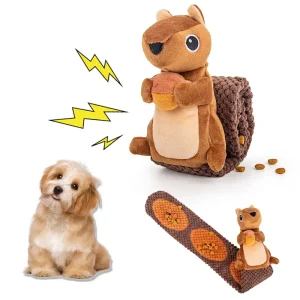
Interactive Squeaky Plush Squirrel Dog Chew Toy
Key takeaway: Squeaky wins for fun and enrichment in ~70% of cases, but non-squeaky alternatives shine for noise-sensitive dogs or heavy chewers who dismantle toys quickly.
 

Buying Guide: Matching Toys to Dogs (and Your Business)

  • Indestructible squeaky dog toys & durable squeaky toys for dogs: Look for ballistic-nylon exteriors, reinforced seams, and hidden squeakers (great for aggressive chewers and terriers/herding breeds).
  • Small dog squeaky toys: Lightweight plush or soft rubber—perfect for toy breeds and puppies.
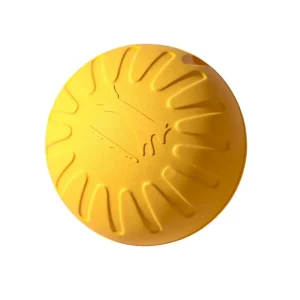
  • Rubber squeaky dog toys / squeaky ball dog toy: Bounce + squeak combo = indoor/outdoor winner.
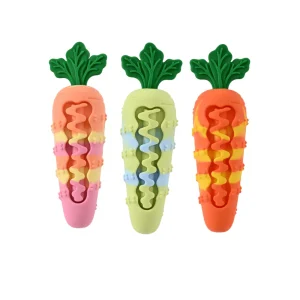
  • Dog squeaky bone toy or squeaky carrot dog toy: Novel shapes keep interest high longer.
  • Squeaky animal dog toys: Full prey-mimic experience.


Practical Tips for Pet Professionals

Groomers & salons: Use squeaky toys during drying to distract anxious dogs.
Trainers & boarding facilities: High-value squeaky rewards accelerate recall and focus work.
Vets & shelters: Screen for noise sensitivity first; stock both squeaky and silent options.
Breeders & boutiques: Bundle durable squeaky toys with puppy kits.
E-commerce / subscription boxes / marketplace resellers: Highlight “science-backed prey-drive toys” in listings—conversion booster.
 
Safety first: Supervise aggressive chewers, replace damaged toys immediately, and size-match to prevent choking.
 

Ready to Stock the Best Squeaky (and Silent) Toys at Wholesale?

 
Whether you run a pet grooming salon in Los Angeles, supply rescues across the U.S., or ship to international e-commerce stores, having reliable bulk access to indestructible squeaky dog toys, rubber squeaky dog toys, small dog squeaky toys, and quiet alternatives makes all the difference.
 
Petfairs is the online wholesale platform built exactly for you—small B buyers (groomers, trainers, vets, mobile groomers, new store owners, breeders) and large C partners (pet boutiques, physical stores, subscription boxes, online sellers, shelters, and daycares). We offer global shipping to most countries, competitive bulk pricing on the full range of dog (and cat/exotic) supplies, and fast restock of proven sellers like squeaky balls, bones, carrots, and animal plush.
 
Browse the latest dog squeaky toy collections, compare durable vs. plush lines, and place orders 24/7 at Petfairs.com. Your clients’ dogs (and your bottom line) will thank you.
 
Sources (all peer-reviewed or veterinary-reviewed):
  • Pullen et al. (2010) Applied Animal Behaviour Science
  • Storengen & Lingaas (2015) Applied Animal Behaviour Science
  • Salonen et al. (2020) Scientific Reports
  • Heffner audiogram studies & 2024 updates
  • Conditioned-reinforcement meta-analyses (2020–2021)
Aria

Petfairs Writer Introduction:

Hi, I’m Aria—an animal lover rooted in Minnesota with 11 years of hands-on pet parenting experience. Raised in a small town here, I’ve spent years helping neighbors train their cats and dogs, from correcting basic behaviors to fostering better human-pet bonds. Beyond caring for my own furry companions, I’m passionate about rescuing stray animals, dedicating time to their care and rehoming. With a deep understanding of what pets (and their owners) need, I’m here to share practical insights, tailored to Minnesota’s climate and pet owners’ daily lives—all backed by my years of real-world pet care experience.


FAQ

Why do squeaky toys attract dogs more than silent toys?
Squeaky toys combine multiple high-impact attractors that silent toys lack: they produce prey-like high-pitched sounds (triggering predatory-play motor patterns), have high auditory salience matching dogs’ sensitive hearing ranges, provide tight action→feedback loops (biting = squeaking, reinforcing behavior), and often have chew-friendly textures. These features make them “supernormal” play stimuli that amplify dogs’ interest.
The squeak is a critical factor, but it often works with other toy properties. Controlled research is limited, but converging evidence shows the squeak’s high-frequency, contingent feedback is unique—however, many squeaky toys are also soft, compressible, and easy to manipulate, which adds oral-tactile reward. Isolating the squeak alone (e.g., sound-only vs. silent identical toys) shows it enhances interest, but it is most effective when bundled with chewable textures.
No. Individual differences play a key role: some dogs (especially noise-sensitive ones) find the sudden, high-pitched squeak aversive and will avoid it. Others may lack strong predatory-play motivation or lose interest quickly due to habituation. Additionally, highly toy-motivated dogs may obsess over them, while some show little engagement with any toys overall.
These behaviors are predatory-play motor patterns. Squeaks function as acoustic analogs of prey distress calls, which naturally elicit dogs’ instinctive chase→grab→shake sequences—similar to how they would handle small prey. This is supported by research linking prey-like cues (including high-pitched noises) to intensified predatory-play behaviors in dogs.
Dogs have hearing that extends to higher frequencies (up to ~45–46 kHz) and strongest sensitivity in mid-to-high kHz bands. Squeakers typically produce sharp, narrow-band high-frequency sounds that fall near these sensitive regions, making them more attention-grabbing than lower-frequency or less distinct noises. This auditory advantage means dogs detect and respond to squeaks more readily than humans.
Yes, partially. The squeak creates a reliable action→feedback loop: biting the toy immediately produces a squeak, which acts like a conditioned reinforcer (similar to a clicker in training). Over time, dogs learn that biting leads to the salient sound, reinforcing the behavior—though the squeak is not always superior to primary reinforcers (like food) and works best when paired with play or attention.
This is due to habituation, a well-documented phenomenon in dog object play. Dogs have a preference for novel objects (neophilia), and repeated exposure to the same squeaky toy reduces its novelty. Interest can be “reset” by rotating toys, limiting access to specific contexts, or choosing toys with varied squeak sounds to avoid habituation.
Yes, two main risks: 1) Foreign-body ingestion: If a dog tears the toy apart and swallows the squeaker or broken pieces, it can cause gastrointestinal obstruction. 2) Over-arousal/frustration: Highly toy-motivated dogs may become fixated on extracting the squeaker, leading to stress or destructive behavior. Veterinary guidance recommends monitoring toy wear and choosing appropriately sized toys for “destroyer” dogs.
Yes. Breed differences in predatory motor pattern expression (shaped by selection history) influence toy preference. Some breeds with stronger hunting instincts may be more drawn to squeaky toys’ prey-like cues, while others may show less interest. Research also notes breed differences in the onset and patterning of object play, which affects how they engage with squeaky toys.
Absolutely. Squeaky toys are high-value reinforcers for training, as their salient feedback and appeal can motivate dogs to learn commands. For enrichment, they provide mental and physical stimulation—especially when used in interactive play (e.g., tug, fetch) that leverages social reinforcement from owners. However, they should be avoided for noise-sensitive dogs, who may find them stressful.

Related Blog

Why Do Dogs Like Squeaky Toys

Why Do Dogs Like Squeaky Toys?

Learn the real science behind dogs’ obsession with squeaky toys (distress call mimicry, auditory sensitivity). Get practical buyer tips for pet businesses & owners only on Petfairs.
wholesale dog feeding storage & accessory supplies

What Pet Products Are Trending in 2026?

Pet products trending in 2026 cluster around smart automation, enrichment-first play, everyday comfort, DIY grooming, and safer travel. Industry spend continues rising, and search data shows strong momentum in GPS containment, AirTag collar accessories, lick mats, dog probiotics, and tofu cat litter. This guide maps demand scenarios to supplier keywords and shows how retailers can source fast-moving inventory through Petfairs.
slow feeder dog bowl

How to Choose a Slow Feeder Bowl ?

Learn how to choose the best slow feeder bowl based on dog behavior, materials, and feeding scenarios. Ideal for pet owners and wholesale buyers.

Table of Contents

Leave a Reply

Your email address will not be published. Required fields are marked *

You May Also Like

us.petfairs

SHIPPED FROM U.S LOCAL WAREHOUSE

Register to Unlock

Wholesale Prices

$10 Off for New Buyers : 6YPYU5KC

✓ Factory-Direct Pricing on Pet Supplies

✓ Low MOQ: Only 1 Carton

✓ Free Nationwide Shipping

Having trouble finding
what you need?

Please select the problem you’re experiencing: