$10 Off for New Buyers with Code 6YPYU5KC | US Free Shipping | Start from 1 Carton

Do Dogs Really Need Pet Stairs?

In grooming salons, veterinary clinics, adoption centers, and pet-focused eCommerce stores, one question comes up repeatedly:
“Are pet stairs actually necessary, or just another accessory?”
From a veterinary and biomechanical perspective, the answer is increasingly clear: for many dogs, repetitive jumping from human-height furniture is a preventable risk factor for joint and spinal injury.
This article breaks down the science, material considerations, and business implications behind pet stairs—so U.S. pet professionals and retailers can make informed, defensible decisions.
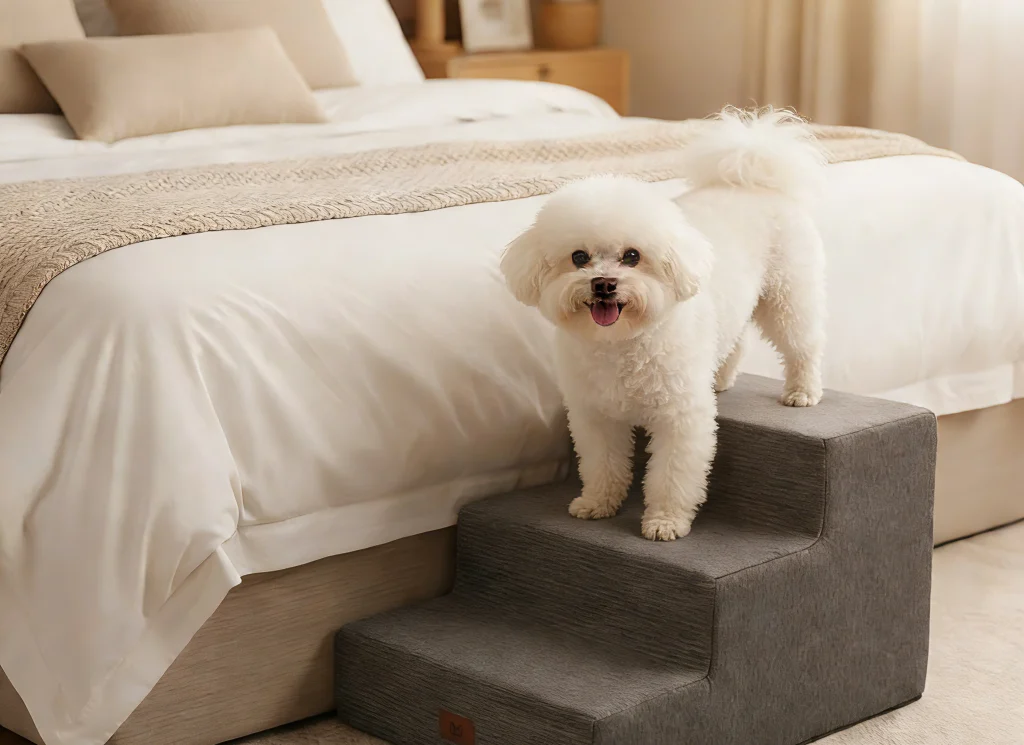
pet ramps for steps

1. The Hidden Biomechanics Behind “Just a Jump”

1.1 Impact force: what really happens when a dog jumps down

Veterinary biomechanics studies consistently show that landing impact forces can reach multiple times an animal’s body weight, especially during forelimb contact.
  • According to veterinary orthopedic consensus summarized by VCA Animal Hospitals, dogs absorb the majority of landing force through their front limbs and elbows, not evenly across all four legs.
  • Studies in animal locomotion biomechanics (commonly cited in AVMA continuing education materials) estimate that landing forces range between 3–5× body weight, depending on speed, angle, and surface friction.
Practical interpretation (conservative): A 10 kg (22 lb) dog may transiently load its forelimbs with 30–50 kg of force when jumping off a bed or sofa.
This is not catastrophic once—but repetitive exposure is the concern.
Source types you can verify:
  • VCA Animal Hospitals – Canine joint & orthopedic health education
  • AVMA CE materials on canine locomotion
  • General veterinary biomechanics textbooks (not single studies)

1.2 The “2× back height” risk threshold

While there is no single regulatory standard for “safe jumping height,” veterinary ergonomics commonly reference relative body proportions.
  • Most household beds in the U.S. measure 50–65 cm (20–26 inches) from floor to mattress.
  • Many small and medium dogs have a withers height below 30 cm (12 inches).
Veterinary physical rehabilitation specialists generally agree:
When jump height exceeds ~2× a dog’s shoulder height, joint strain and mis-landing risk increase disproportionately.
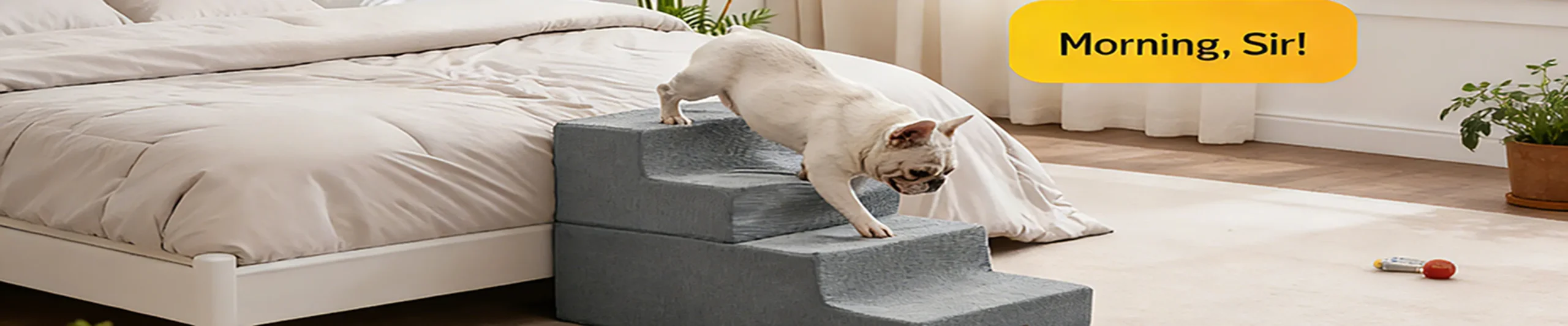
This guideline is frequently cited in:
  • Canine rehabilitation programs
  • Post-surgical recovery protocols
  • Senior dog mobility recommendations

Why “Down” Is Riskier Than “Up”

Pet owners often say: “My dog jumps up just fine.”
From a clinical standpoint, descending is the problem.

Key risk factors when jumping down:

  • Forelimb load concentration (≈60% of body weight on impact)
  • Reduced shock absorption on hard floors (tile, hardwood, laminate)
  • Slip-induced torsion, a major contributor to:
    • Cranial cruciate ligament (CCL) injuries
    • Elbow dysplasia aggravation
    • Carpal hyperextension
Veterinary orthopedic specialists consistently note that many injuries occur without visible trauma—they accumulate silently over time.
 
  1. Breed Categories With Elevated Risk Profiles

This is not about labeling breeds as “weak,” but about anatomical reality.

3.1 Long-back, short-leg breeds

Examples: Dachshund, Corgi, Basset Hound
  • Disproportionate spinal length increases torque during jumping
  • Strongly associated with Intervertebral Disc Disease (IVDD)
  • IVDD prevention guidelines from AKC Canine Health Foundation explicitly discourage repetitive jumping
For these dogs, ramps or low-rise stairs are not optional accessories—they are preventive tools.
 
3.2 Small companion breeds
Examples: Pomeranian, Chihuahua, Toy Poodle, Yorkshire Terrier
  • High prevalence of patellar luxation (documented by AKC & AAHA)
  • Even low furniture heights can exceed safe biomechanical limits
  • Slipping during descent is a common trigger event
3.3 Large and aging dogs
Examples: Labrador Retriever, Golden Retriever, German Shepherd
  • Genetic predisposition to hip dysplasia
  • Declining proprioception with age
  • Hesitation before jumping is often an early pain signal—not stubbornness
  1. Material Choices: Where Many Retailers Get It Wrong

From a wholesale and professional-use perspective, material selection matters as much as step count.

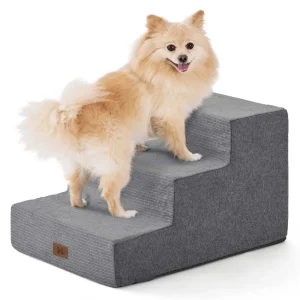
4.1 High-density foam (soft-core stairs)

Advantages
  • Excellent shock absorption
  • Lightweight and easy to reposition
  • Ideal for small dogs under ~15 kg
Limitations
  • Insufficient structural support for heavier dogs
  • Excessive compression can destabilize footing
 4.2 Rigid frame (wood or reinforced plastic)
Advantages
  • Stable load-bearing capacity
  • Suitable for medium to large dogs
Risks
  • Hard edges increase collision injury risk
  • Requires proper surface traction to be safe 

4.3 Surface traction: a non-negotiable factor

Veterinary rehab professionals emphasize grip confidence as much as physical safety.
Recommended surfaces
  • Corduroy-style fabric
  • Textured woven materials
  • Rubberized or dotted anti-slip bases
Surfaces to avoid
  • Smooth faux leather
  • Velvet or silk-like finishes
Low traction increases hesitation, missteps, and avoidance behavior—often misinterpreted as “the dog doesn’t like stairs.”

Step Count Is Not Marketing—It’s Geometry

From a professional buying standpoint (groomers, clinics, retailers):

The Height Matching Guide

Selecting the right number of steps is the most common customer pain point. This table ensures the pet stairs align with standard furniture heights.
Step CountTarget Height (cm/in)Best ForTypical Furniture
2-Step30–38 cm (12–15″)Toy breeds & KittensLow-profile sofas, pet ottomans
3-Step40–50 cm (16–20″)Small to Medium dogsStandard UK/EU sofas, coffee tables
4-Step52–65 cm (21–25″)Senior dogs & IVDD-prone breedsStandard U.S. Beds, high couches
5-Step67 cm+ (26″+)Post-op rehab & giant bedsHigh pillow-top mattresses, high-set beds

Safety Features Checklist

For retailers and clinic owners, quality is defined by these three metrics. Use this as a “Buyer’s Inspection Guide.”
 
FeatureThe “Gold Standard”Why it Matters
TractionCorduroy, grooved fabric, or carpetPrevents “slippage-induced torsion” during descent.
Core Density30D+ High-density furniture foamPrevents the stair from “bottoming out” under weight.
StabilityRubberized non-slip waterproof baseEnsures the stairs don’t slide away when the dog launches.
Edge ProfileBeveled or rounded edgesReduces the risk of “impact bruising” if the dog misses a step.
The top step should land flush or within 2–3 cm of the target surface. Any remaining jump negates much of the protective benefit.

Behavioral Science: When Dogs “Refuse” to Use Stairs

This is not stubbornness.
According to applied animal behavior research:
  • Dogs have limited depth perception for horizontal planes
  • Side-set eyes reduce step-edge clarity
  • Slippery or unstable surfaces create learned avoidance
Evidence-based training approaches used by trainers and veterinary rehab teams include:
  • Gradual treat placement per step
  • Familiar scent transfer
  • Temporary blocking of jump alternatives
Most dogs adapt within 5–10 short sessions when surfaces feel secure.
 

Why This Matters for Pet Businesses in the U.S.

For U.S.-based pet professionals and retailers, pet stairs are not a trend product—they are:
  • A preventive care tool aligned with veterinary guidance
  • A low-return, low-complaint category when specified correctly
  • A natural cross-sell for:
    • Grooming services
    • Senior pet care
    • Adoption starter kits
    • Recovery & wellness collections
From a wholesale perspective, offering multiple step counts and materials allows businesses to serve diverse end users without overstock risk.

Final Takeaway

Dogs do not complain when something hurts—they adapt, compensate, and deteriorate quietly.
Pet stairs are not about indulgence. They are about reducing repetitive, avoidable mechanical stress in an environment designed for humans, not dogs.
For modern U.S. pet businesses, this is not just good animal care—it is responsible product curation.
Aria

Petfairs Writer Introduction:

Hi, I’m Aria—an animal lover rooted in Minnesota with 11 years of hands-on pet parenting experience. Raised in a small town here, I’ve spent years helping neighbors train their cats and dogs, from correcting basic behaviors to fostering better human-pet bonds. Beyond caring for my own furry companions, I’m passionate about rescuing stray animals, dedicating time to their care and rehoming. With a deep understanding of what pets (and their owners) need, I’m here to share practical insights, tailored to Minnesota’s climate and pet owners’ daily lives—all backed by my years of real-world pet care experience.


Related Blog

Pet Wipes Ultimate Guide to Tear Stain Removal & Eye Care for Dogs, Cats, Rabbits US Petfairs Wholesale

Pet Wipes: The Ultimate Guide to Effective Tear Stain Removal, Eye Cleaning, and Infection Prevention for Dogs, Cats, Puppies, Rabbits, and All Pets

Answer the key question: how many ribs does a dog have? Discover dogs’ 26-rib count, broken rib signs, and expert harness tips for US groomers, vets, trainers & wholesale pet supply retailers.
pet ramps for steps

Do Dogs Really Need Pet Stairs?

Is jumping a risk for dogs? Explore the biomechanics of joint injury, breed-specific risks, and material safety standards for pet ramps and bedside stairs.
Super Bowl 2026 Is Coming. And Yeah, Pets Are Part of It Now

Super Bowl 2026 Is Coming. And Yeah, Pets Are Part of It Now.

Get ready for Super Bowl 2026 with practical football pet toys that keep your dogs & cats active, mentally stimulated, and calm during game day parties. Stock wholesale pet toys at US Petfairs with fast US shipping.

Table of Contents

Leave a Reply

Your email address will not be published. Required fields are marked *

You May Also Like

us.petfairs

SHIPPED FROM U.S LOCAL WAREHOUSE

Register to Unlock

Wholesale Prices

$10 Off for New Buyers : 6YPYU5KC

✓ Factory-Direct Pricing on Pet Supplies

✓ Low MOQ: Only 1 Carton

✓ Free Nationwide Shipping

Having trouble finding
what you need?

Please select the problem you’re experiencing: